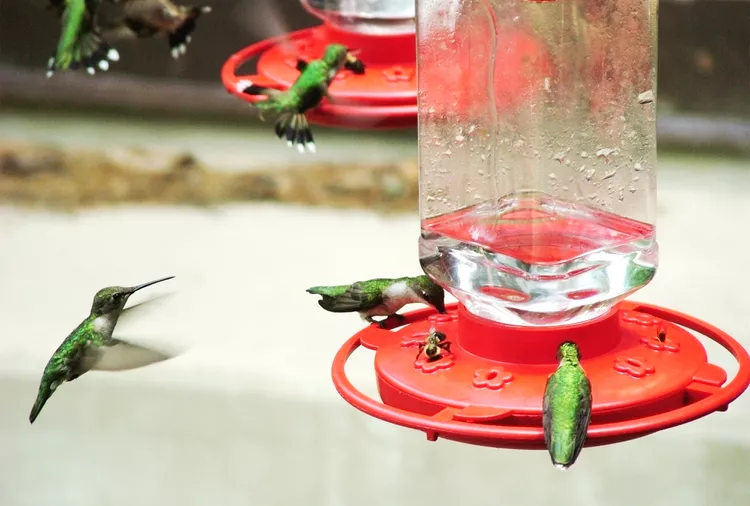
The same sugary nectar in a hummingbird feeder that attracts the charming birds may also lure unwanted insects, including bees and wasps. There are several ways to welcome only hummingbirds to your feeder, and we're breaking down expert-recommended strategies for minimizing the presence of pesky buzzing pests. With this helpful insight, you can learn how to keep bees away from hummingbird feeders without deterring the whimsical presence of the mechanism's namesake bird.
- Dr. Tracy Ellis, Ph.D., is an entomologist at FarmSense, an agricultural insect monitoring company.
- Charles van Rees, Ph.D., is a conservation scientist, naturalist, and founder of Gulo in Nature.
Why Bees Are Attracted to Hummingbird Feeders
Nectar flowers are the primary source of food for many bee species and hummingbirds. They are pollinators that feast on flowers full of nectar and go from one flower to the next. Placing a hummingbird feeder in your yard will likely draw bees and wasps to the sugary concoction.
A hummingbird feeder doesn‘t act as a hummingbird‘s primary meal. "The sugary syrup provided to hummingbirds in the feeders is meant to supplement the hummingbird‘s normal diet of nectar from flowers," says entomologist Dr. Tracy Ellis.
"Sugar is a quick source of energy, so many animals have adapted to take advantage of flower nectars, which the flowers provide specifically to attract pollinators," says Charles van Rees, conservation scientist. "Most adult bees and wasps feed primarily on nectar, even if they gather other protein-rich foods like pollen or feed on other invertebrates to raise their young."
When Attracting Bees and Wasps Is a Problem
You probably don‘t need to worry if you notice only a few bees and wasps buzzing around the feeder. "Generally, wasps and bees will mind their own business and are just interested in getting a sugary snack," says van Rees. However, with many bees flying around, safety could become an issue since there‘s a chance of being stung. "Having more of them around does increase the chances of an unwanted encounter," he explains.
Knowing the difference between wasps and bees makes a difference, too. "Yellow jacket wasps usually have shiny yellow hairless bodies while honey bees are hairier and have pollen clustered on their rear legs," says Dr. Ellis. "Yellow jacket wasps do not lose their stinger like a honey bee and can sting several times if trapped, such as within a piece of clothing or at the bend of an elbow or knee. Honey bees lose their stinger, which is often left in the skin; removing it quickly can decrease the amount of venom," she adds.
Having bees and wasps around a hummingbird feeder means there is a chance you could be stung. "People tend to swat at flying insects, and consequently come in contact, and often get stung," says Dr. Ellis. This could be problematic for people who are unaware they have an allergy to bees or wasps. "People may not know they have a hyper-allergy to the venom of stinging insects," she says. "These people, who experience symptoms other than a localized area of discomfort at the sting site, such as difficulty breathing, should seek immediate medical attention."
Worried about bees and wasps hurting hummingbirds? "Hummingbirds are much more likely to attack and drive off bees and wasps in my experience," says van Rees. However, he advises paying attention to an insect that can harm hummingbirds. "You should keep an eye out for the invasive Chinese mantis (Tenodera sinensis) because they have been observed attacking and capturing hummingbirds at feeders."
Tips for Keeping Bees Away from Hummingbird Feeders
These expert-recommended strategies explain how to keep bees away from hummingbird feeders, as well as ways to deter other unwanted pests.
Use a Bee Guard or Moat
Buy a hummingbird feeder with a bee guard or add one to your feeder so only hummingbirds can access the sugary snack. "Feeders may be fitted with 'bee guards' that prevent the bees and yellow jackets from being able to reach the sugary solution by placing a thick mesh over the opening," says Dr. Ellis. "Long-tongued hummingbirds and hummingbird moths will still be able to place their siphoning tongue through the bee guard."
Another option is to place water in between the feeder and the bees. "Adding a bee moat, a tray of water that adds some distance between the nectar source and any airborne suitors, may also prove effective since bees can‘t swim," says van Rees.
Clean the Feeder Frequently
Refilling your hummingbird feeder isn‘t the only thing you need to do after you hang it—you also need to clean it regularly. "Change feeders every other day and thoroughly clean them each time to prevent harmful mold growth," says Dr. Ellis. Not cleaning the feeder frequently could potentially cause hummingbirds to fall ill. "The sugary solution will ferment, mold will grow, and this becomes harmful for the hummingbirds," says Dr. Ellis. "The regular sanitation of keeping the inside and outside of the hummingbird feeder clean is also an important step to keeping the insects at bay."
Reduce Sugary Solution on the Outside of the Feeder
Another tip for keeping bees away from hummingbird feeders is to minimize the amount of sugar solution on the mechanism's exterior. "Be sure to avoid letting excess sugar collect on the outside of the feeder during filling, and check carefully for leaks," says van Rees. Keeping your feeder free of any sugary residue will minimize other insects. "Each time you refill the feeder, make sure the outside of the feeder and your hands are free from sugar solution," says Dr. Ellis.
Provide Water for Bees and Insects
Bees, wasps, and other insects need water to survive, so providing them with a water source can deter them from the hummingbird feeder. "Muddy puddles or birdbaths will also attract them, and placing those features strategically in your garden may be a good distraction for the bees," says van Rees.
Grow a Pollinator Garden
If you're wondering how to keep bees away from hummingbird feeders with other yard features, consider outfitting your landscape with nectar-filled flowers. Growing plants that attract bees is a way to keep them away from the hummingbird feeder. Van Rees suggests growing various mints, lavender, coneflower, and sunflowers.
Relocate the Feeder
If you heed all the other tips and notice there are still too many bees and wasps buzzing around the hummingbird feeder, it‘s time to take down the feeder and place it in a new spot. Different reasons could cause these insects to hang around. "Maybe there was a heatwave or some other occurrence that reduced the amount of available alternate food," says Dr. Ellis. "In this case, the stinging insects might be 'hangry'—bad-tempered or irritable because of hunger—and keeping the hummingbirds away."
When you relocate the feeder, bees need time to find a food source again. "While both bees and hummingbirds are rather visual in finding food sources, bees take time to reorient to new nectar sources, and they have to show their hive mates where they are," says van Rees. "This makes them slower at taking advantage when the feeder moves, while the hummingbirds should find it quickly." Typically, relocating the hummingbird feeder only works if you have a spacious yard because for this technique to have any effect, feeders need to be moved at least 10 feet; Ellis recommends "at least 25 feet, and on the other side of a tree."