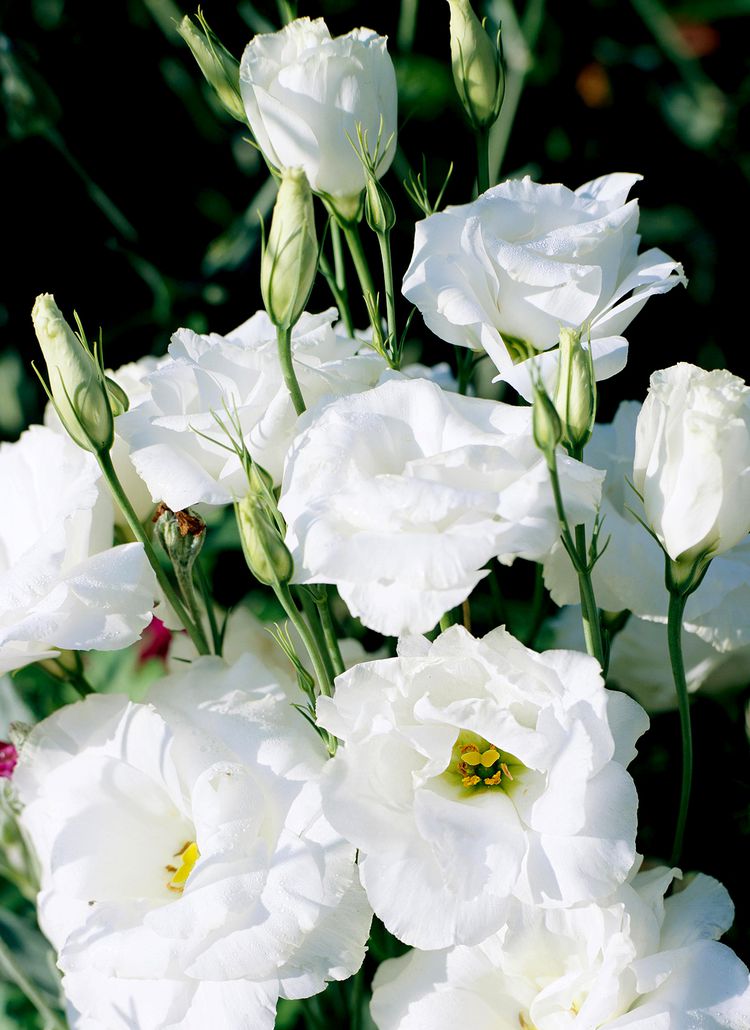
Lisianthus, often favored by floral designers when an elegant flower is needed for an arrangement, is the epitome of a classic, versatile flower. The ruffled petals and elegant buds come in many colors. The delicate-looking blooms are known not only for their beauty but also for their ability to hold up as a cut flower.
Because many lisianthus were developed for cutting, some of these plants require staking to make sure they don't flop. Some newer varieties are bred to be dwarf, which is much better for a home garden setting. When selecting blooms for cut flowers, pick stems that are nearly but not quite fully open. Buds that are too small and tight won't open properly.
Although this plant now has the common name lisianthus, it has a long history of botanical name changes. Whatever name it goes by, the blooms of lisianthus are what this plant is all about. They come in a range of colors: white, blue, purple, rose, and pink, as well as bicolor combinations of those hues. Lisianthus is native to ditches and grasslands in some western states. To survive in these harsh environments, this plant has thick, waxy foliage to prevent it from drying out.
Lisianthus Overview
| Genus Name | Eustoma |
| Common Name | Lisianthus |
| Plant Type | Annual, Perennial |
| Light | Sun |
| Height | 1 to 3 feet |
| Width | 9 to 12 inches |
| Flower Color | Blue, Pink, Purple, White |
| Foliage Color | Blue/Green |
| Season Features | Fall Bloom, Summer Bloom |
| Special Features | Cut Flowers, Good for Containers, Low Maintenance |
| Zones | 10, 8, 9 |
| Propagation | Seed |
| Problem Solvers | Drought Tolerant |
Where to Plant Lisianthus
This plant grows as an annual in most areas and as a perennial in Zones 8-10. It has a reputation for being tricky for the home gardener, but close attention to its sun, soil, and watering requirements is worth the effort to enjoy these sensational flowers.
These plants are perfect for beds and borders. Lisianthus is native to North America.
How and When to Plant Lisianthus
Plant transplants two to four weeks before the last spring frost since they need a period of cool soil. Space them 4 to 6 inches apart and position them slightly higher than the soil level. They do best in neutral or slightly acidic soil (pH 6.5-7.0) that is well-draining and enriched with compost.
Growing lisianthus transplants from seeds is tricky, even for experts. They need five to six months from seed to bloom. If you want to try, spread the seeds in mid-December to January on top of moist vermiculite and peat potting medium and cover the container with plastic wrap. Use grow lights only a couple of inches above the container to provide 16 hours of light per day until the seedlings emerge, and keep the temperature between 70°F and 75°F. After the seedlings emerge, remove the plastic—but not the grow lights—and maintain a temperature above 60°F.
In Zones 8-10, plant seeds outdoors in late summer for blooms the following spring.
Lisianthus Care Tips
Light
Plant lisianthus in an area that receives full sun for six to eight hours a day.
Soil and Water
Lisianthus prefers well-draining soil enriched with organic matter, such as compost or leaf mold. The pH should remain in the neutral range of 6.5 to 7.0. The soil should stay moist but not wet. Water as soon as the soil feels dry, keeping the moisture off the leaves. A soaker hose is a useful addition to any lisianthus garden bed.
Temperature and Humidity
Lisianthus is a heat-loving, drought-tolerant plant that prefers low humidity. The plant doesn't tolerate high humidity and is prone to developing diseases when grown in humid regions.
Fertilizer
This plant benefits from regular feeding. Apply a commercial flowering plant fertilizer with more potassium than nitrogen every other time you water during the blooming period. Follow the product label instructions for the amount to use.
Pruning
Deadheading lisianthus encourages perpetual blooms. In areas where they can be grown as perennials, cut back the plant to the ground in winter and cover it with mulch. In areas with extremely low temperatures, use a row cover for added protection.
Pests and Problems
Aphids, white flies and thrips are persistent pests that gardeners can control with insecticidal soap or neem oil. Plants that grow in wet conditions are susceptible to problems with leaf spot, botrytis, and powdery mildew.
How to Propagate Lisianthus
When growing lisianthus, plan on investing some time. This plant can take a long while to grow from seed, sometimes as long as 15-20 months from sowing to bloom. The seed of this plant is so fine and dust-like that it's challenging to sow just a few plants at a time. Look for pelleted seed that gives you larger particles to work with. Lisianthus can also be propagated by stem cuttings taken in spring. Here's how:
- Using clean, sharp pruners, cut a section of healthy growth that's 3 to 6 inches long.
- Remove leaves from the lower half of the cutting and dip the cut end into rooting hormone.
- Immediately pot up your cutting in moist potting mix, sand, perlite, or vermiculite. Firm the soil around the stem. Cover the cutting with a clear plastic bag.
- Place your planted cutting in bright light but avoid direct sunlight.
- Remove the plastic occasionally to check the soil moisture and give the plant some airl The cutting should root within a month or two.
Types of Lisianthus
'Balboa White' Lisianthus
Eustoma 'Balboa White' offers double white blooms on 3-foot-tall plants.
'Forever Blue' Lisianthus
This variety of Eustoma offers beautiful violet-purple flowers on compact, 10-inch-tall plants that don't require staking.
'Forever White' Lisianthus
Eustoma 'Forever White' is an award-winning selection with pure-white flowers on 10-inch-tall plants.
'Lisa Pink' Lisianthus
This Eustoma selection offers single pink blooms on compact, 8-inch-tall plants.
Lisianthus Companion Plants
Ornamental Pepper
Heat up your garden with ornamental peppers! Much like hot peppers you grow in the veggie garden, ornamental peppers produce colorful little fruits that are round or pointed. But these are so attractive in their own right that they can be grown just for show—not eating. The peppers are indeed edible, but usually, their flavor is lacking compared to peppers grown for the table. Depending on the variety, the peppers appear in shades of white, purple, red, orange, and yellow—often with multiple colors on the same plant. They like rich, well-drained soil that's evenly moist.
Annual Vinca
You have to love annual vinca—it really delivers. It tolerates various conditions with its almost unreal-looking, glossy green leaves and pretty pink, lavender, or red flowers that look like tiny parasols. Whether the summer is dry or wet, hot or cold, vinca plugs along unfazed. It makes a great container plant, or plant it in a bed or border, grouping at least eight or more together for the best effect.
Plant established seedlings in spring after all danger of frost has passed. Vinca withstands drought but does best with moderate moisture. Fertilize occasionally. Like impatiens, this plant tends to be "self-cleaning" and needs little deadheading.
Zinnias
Want fast color for just pennies? Plant zinnias! A packet of seeds will fill an area with gorgeous flowers in a fantastic array of shapes and colors—even green— and it will happen in just weeks. There are dwarf types of zinnias, tall types, quill-leaf cactus types, spider types, multicolor, special seed blends for cutting, blends for attracting butterflies, and more. Zinnias are so highly attractive to butterflies that you can count on having these fluttering guests dining in your garden every afternoon. But to attract the most, plant many tall red or hot pink zinnias in a large patch. 'Big Red' is especially nice for this, and the flowers are outstanding and excellent for cutting.
Zinnias grow quickly from seed sown right in the ground and do best in full sun with dry to well-drained soil.