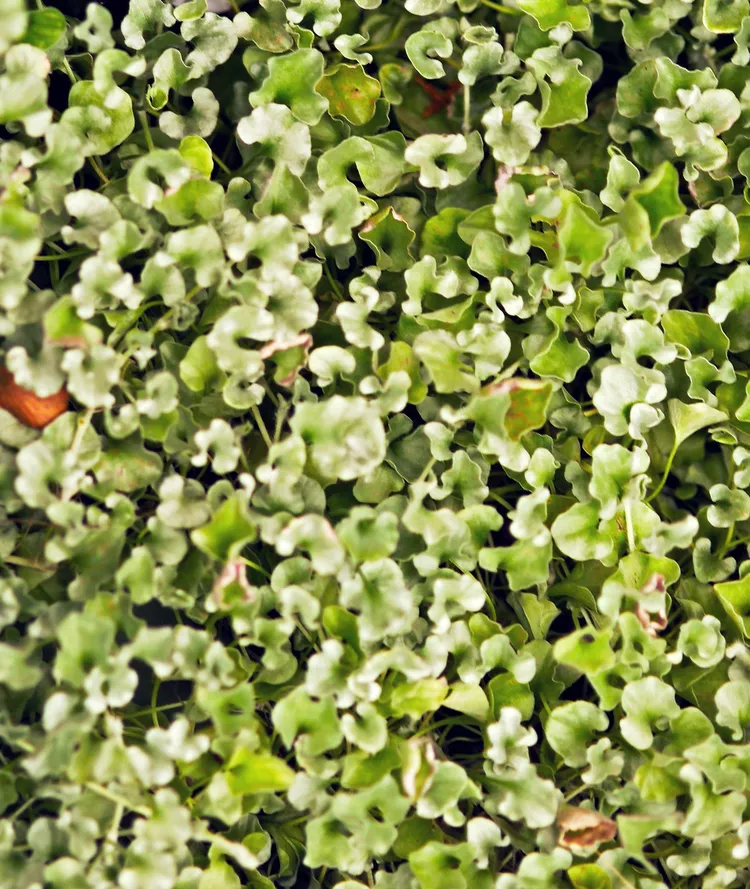
Dichondra makes a good accent in a garden. Its fast growth and 2– to 3-inch height with trailing stems make it valuable as a groundcover or spilling down a wall or container. Its pale green or silver foliage creates a dense mat of leaves that soften any area. Dichondra is perennial in Zones 10 and 11 and grown as an annual elsewhere.
Dichondra Overview
| Genus Name | Dichondra |
| Common Name | Dichondra |
| Plant Type | Annual, Perennial |
| Light | Part Sun, Sun |
| Height | 2 to 3 inches |
| Width | 3 to 6 feet |
| Foliage Color | Blue/Green, Gray/Silver |
| Special Features | Good for Containers, Low Maintenance |
| Zones | 10, 11 |
| Propagation | Seed, Stem Cuttings |
| Problem Solvers | Deer Resistant, Drought Tolerant, Groundcover |
Where to Grow Dichondra
Plant dichondra in an area that receives full sun and has excellent drainage, although it will grow (less robustly) in partial sun. Due to its quick-spreading habit, dichondra works well as a no-mow lawn substitute in small areas that don't get much foot traffic. Its dense mats of leaves prevent weed growth and cover areas much quicker than grass. Dichondra can fill in empty spots in borders and is an excellent container plant that looks pretty trailing over a container's edge when combined with other plants.
How and When to Grow Dichondra
Plant dichondra in late spring. Grow it as a perennial in USDA zones 10–11 and as an annual in cooler areas. These warm-weather perennials prefer daytime temperatures of at least 70ºF and night temperatures of 50ºF or above at planting time.
Planting from nursery starts:
- Dig a hole large enough to hold the plant's rootball.
- Add compost to increase soil drainage.
- Place the plant so that the top of the root ball is level with the soil line.
- Backfill the hole and press down on the soil with your hands to remove any air pockets. Leave a slight depression around the plant to hold water.
- Water thoroughly.
Planting from seed:
Dichondra grows best in well-draining soil and full sun.
- Prepare a bed in the garden with excellent drainage.
- When the weather warms to 70ºF in the day and 50ºF at night, sprinkle the seeds over the prepared bed. Lightly press them into the soil, but don't cover them. They need sun to germinate.
- Water well and look for seedlings to emerge in a couple of weeks. Silver varieties send out runners as they grow, so you might want to pinch them to encourage branching. Green types don't require pinching.
- If you are growing dichondra as a groundcover, thin the seedlings to 6 inches apart.
Dichondra Care Tips
Dichondra is easy to care for and requires little attention or maintenance.
Light
Dichondra grows best in full sun. In partial shade, the silver varieties tend to stay greener and have a looser habit. Green types tend to have a dense growth habit, so you generally won't notice much difference in full or partial sun.
Soil and Water
Dichondra needs well-draining soil that will dry out between waterings to prevent root rot. Sandy loam is the best soil for it, and clay doesn't work since it holds water, which isn't suitable for dichondra. Water new plants regularly until they're established, and then let the soil dry before watering. Waterlogged roots will cause root rot.
Temperature and Humidity
Silver dichondra varieties will do better in humidity than green ones. Both colors need warm weather, so don't plant until after the last frost.
Fertilizer
Dichondra is adaptable to many types of soil, so fertilizer is rarely needed.
Pruning
Perennial dichondra grown as groundcover can be mowed to control aggressive spreading. In a container, spiller dichondra can be trimmed to maintain its desired size and shape and encourage new growth.
Potting and Repotting Dichondra
Add spiller dichondra to the edge of well-draining planter boxes, hanging planters, and containers to allow them to fall over the sides of the container. Containers can be shallow since dichondra's roots don't go deep. When it takes up too much room, divide dichondra or repot the entire plant in a larger planter. Choose a new pot that's one size larger than the current pot and fill it with fresh potting mix. Transfer the plant to new container, firm the potting soil around it, and water it well to settle it into its new home.
Pests and Problems
Dichondra flea beetles can cause extensive damage to these plants. You'll know you have them when you see crescent-shaped holes in the leaves. These pests can be treated with insecticides. Too much water can cause the roots to rot and die, killing the plants.
How to Propagate Dichondra
Propagate dichondra with cuttings, divisions, or by planting seeds.
Division: The simplest way to propagate dichondra is to divide it. Dichondra has shallow roots, which makes the process particularly simple. Use a garden trowel to lift a small section of dichondra and gently divide it with your hands so that each section has roots and foliage. Replant in new areas of your garden immediately at the same depth as the original plant.
Cuttings: Cut stems directly below a leaf node. Plant them indoors in a flat or pot with seed-starting mix. Cover them with a plastic bag and place in indirect sunlight. Make sure the soil stays moist. In a few weeks, after roots form, transfer the cuttings to outdoor soil or planters.
Seed: To grow dichondra from seeds, scatter the seeds on loosened soil when temperatures average 70ºF during the day and stay above 50ºF at night. Don't cover them with soil; just press them in. The seeds need sun to germinate. In a couple of weeks, you will see seedlings emerge.
Types of Dichondra
Dichondra Repens
Dichondra repens creates dense mats of color that work well as a backdrop for other plants. Zones 10-11
'Silver Falls' Dichondra
Dichondra argentea 'Silver Falls' has beautiful silver foliage with a cascading habit that makes it a spectacular accent plant. Zones 10-11
Dichondra Companion Plants
Ornamental Pepper
Ornamental peppers, like edible peppers, produce colorful, small, round, or pointed fruits. Although edible, they lack the flavor of peppers grown for the table. Depending on the variety, they set white, purple, red, orange, and yellow fruits—often multiple colors on the same plant. New varieties feature novel fruit shapes and colors and even foliage colors. Keep an eye out for varieties with better habits and longer bloom times. Zones 9-11
Salvia
There's a salvia for your garden, whether you have sun or shade, drought or rain. There are nearly 1,000 species of salvia worldwide, including annual, biennial, and perennial varieties with diverse growth habits varying from short, low-growing plants to tall, sprawling shrub-like plants. Most are easy to grow, drought-tolerant, and deer-resistant, making them an excellent choice for garden beds and borders. All attract hummingbirds and are great picks for hot, dry sites where you want a lot of color all season. Most salvias don't like cool weather, so plant them outdoors after all danger of frost has passed. Zones 3-10
Dwarf Mexican Peturnia
Trumpet-shaped, violet-blue flowers are born on the tips of the 1-foot stems and are extremely showy, in part because of the clouds of butterflies they attract. After the plant finishes flowering for the first time, cut it back about halfway to encourage another flush of blooms. Mexican petunia (Ruellia brittoniana) is very adaptable and will tolerate wet and dry soils. This perennial prefers full sun and will tolerate shade, but it will flower less in low-light situations. This dwarf variety grows less aggressively than the species and is a great choice for a long season of color. Zones 8-11
Garden Plan For Dichondra
Classic Container Garden Plan
Classic shapes and lush floriferous plants combine beautifully in this shade-loving garden plan.